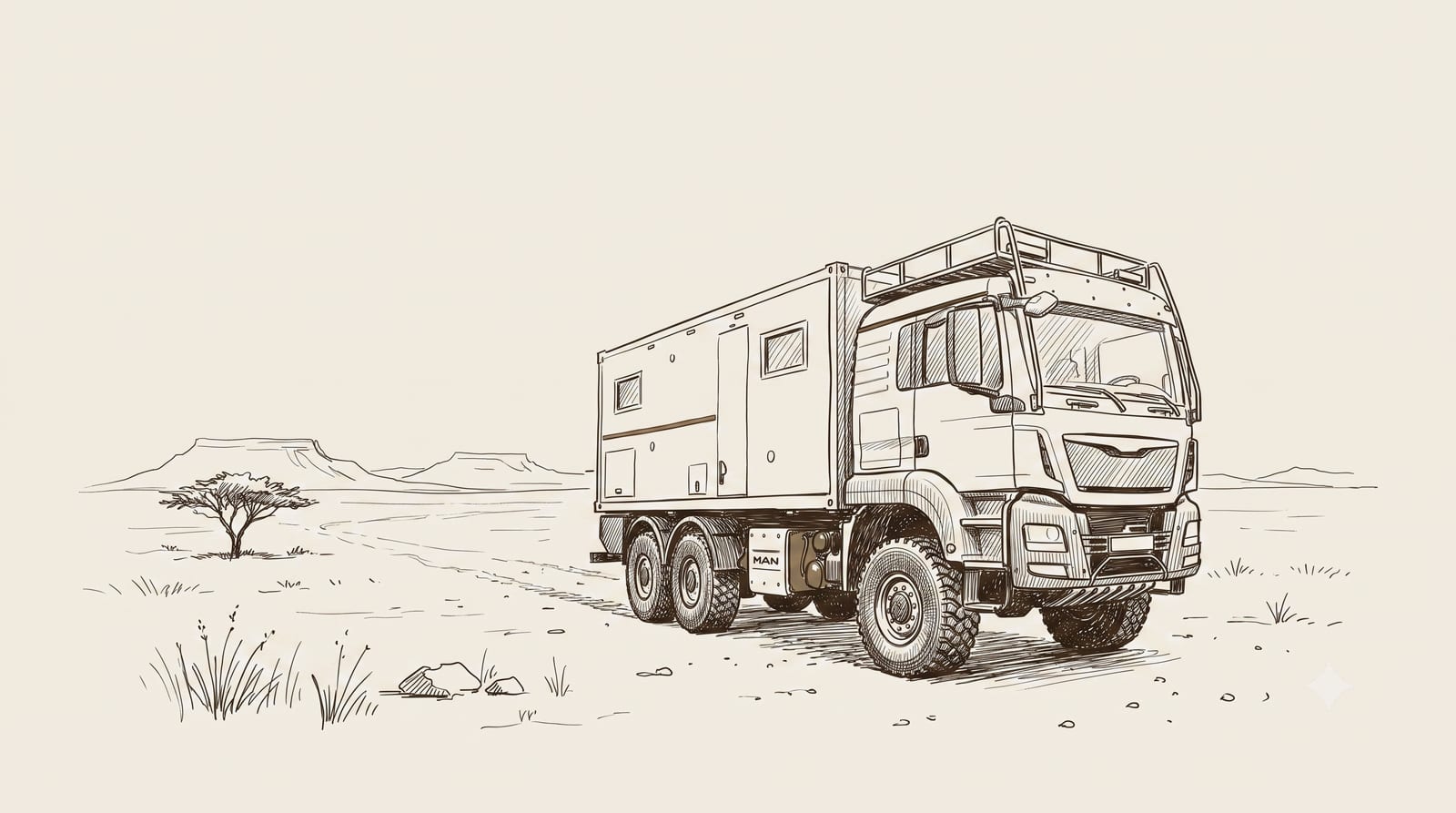
Bliss Mobil expedition across Namibia
The most self-contained way to cross one of the emptiest, most cinematic landscapes on earth.
The verdict — why this Mark
A fully independent overland vehicle turns Namibia from a destination into a way of living for a week. The setting is total — dune, gravel and silence to every horizon — and the self-reliance it asks for is exactly what makes it worth a year of anticipation. It stops short of a life-changer only because comfort travels with you.
▲▲ Worth a year — You plan your year around this. The high point of twelve months.
The story
The facts
The route — how to book
What you need
- Wide-brim sun hat
The desert sun is relentless; shade for your face and neck all day.
- Polarised sunglasses
Cuts the hard glare off gravel and the white pans.
- Rechargeable head torch
For setting up camp and moving around the vehicle after dark, hands free.
- Insulated flask or bottle
Keeps water cool through long drives between resupply points.
- Fine-weave dust buff
Keeps grit out of your mouth and nose on corrugated gravel roads.
Preparation
Body
Physical demand sits at 2/5. Arrive with the fitness this asks for; it repays it.
Mind
The hardest part is rarely the logistics. Expect to be changed, and let it.
Recovery
Recovery is the condition of the adventurous life, not its reward.
Pair it with BND-047 · Forest bathing + an onsen route in Japan from Recovery & Longevity.
Verified member reviews
Only those who have checked it off may judge.
Reviews here come only from Circle members who have verifiably completed this experience. No one can rate what they have not lived — that is the whole point.
Join CircleFrequently asked
When is the best time to go?+
The dry season, roughly May to October, when the tracks are firm, the dust settles at night and wildlife concentrates around shrinking water. The green season is beautiful but complicates remote driving.
How fit or skilled do I need to be?+
Fitness barely enters into it; the trip asks judgement rather than muscle. You should be comfortable driving a large vehicle on gravel and corrugations, managing your own fuel and water range, and navigating with no phone signal for long stretches.
Is it suitable for families?+
Yes, from about six years old. The cabin keeps children in a stable routine with their own bed and food, and the distances rather than the terrain are the main test of patience.
How long should I allow?+
Eight to twelve days lets you link Sossusvlei, Damaraland and often Etosha without rushing the long transfers. Shorter than a week and you spend most of it driving between highlights.
What does it cost?+
This sits in the upper bracket. A Bliss Mobil or comparable expedition vehicle, park fees and the long fuel runs add up, though you save on lodges by carrying your accommodation with you.
BND-001
Done it? Check it off.
Track your progress across the list, share it, and earn your place in the Hall of 100. Accounts are coming — join the waitlist to be first.
Start checking off